


Can Pigeons Damage Solar Panel Wiring?
- Jun 26
- 4 min read
If you have solar panels on your home, you might wonder if pigeons can cause damage to the wiring. Pigeons are common in many neighborhoods, especially in Arizona, and they often like to nest near rooftops. But do they actually chew on solar panel wiring? And if not, what kind of problems can their presence cause? I’ll walk you through what I’ve learned about pigeons and solar panels, how their nesting habits can create risks, and what you can do to protect your solar investment.
Do Pigeons Actually Chew Solar Panel Wiring?
You might have heard stories about birds chewing on wires, but pigeons are not known for chewing electrical wiring like some rodents do. Pigeons have strong beaks, but they mainly use them for pecking food and building nests. They don’t typically gnaw on plastic or rubber insulation around wires.
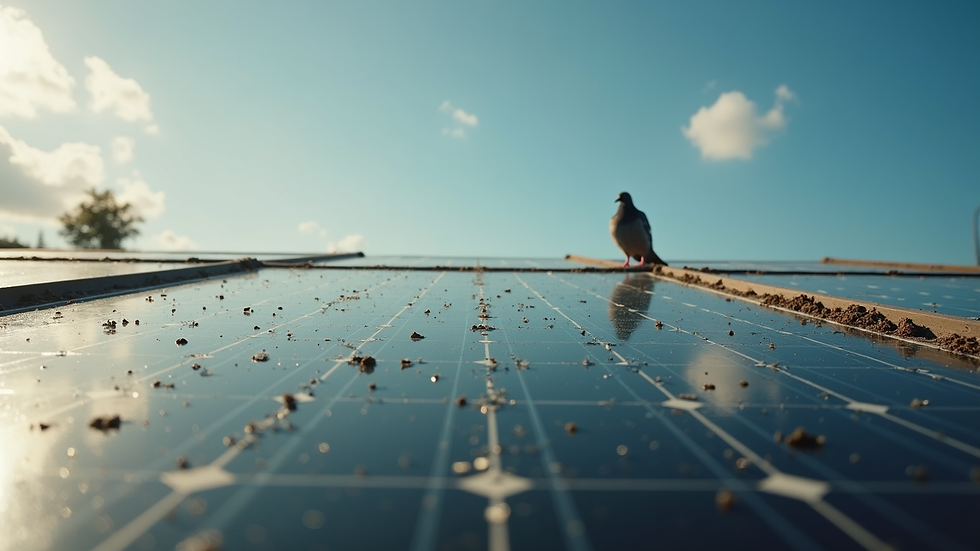
That said, pigeons can still cause damage indirectly. Their droppings are acidic and can corrode metal parts over time. Also, their nesting materials can cover or tangle around wiring, which can lead to other issues.
So, while pigeons don’t usually chew wiring, their presence near your solar panels is still a concern.
How Nesting Materials Create Problems
Pigeons build nests using twigs, leaves, feathers, and other debris. When they choose to nest near or under solar panels, these materials can accumulate around the wiring and panel mounts.
Here’s what can happen:
Block airflow: Solar panels need good airflow underneath to stay cool and work efficiently. Nesting materials can block this airflow, causing panels to overheat and reduce energy output.
Trap moisture: Nesting debris can hold moisture, which may lead to rust or corrosion on metal parts and wiring connections.
Create fire hazards: Dry twigs and leaves near electrical wiring can catch fire if there’s a short circuit or spark.
These problems can reduce the lifespan of your solar system and increase maintenance costs.

Potential Fire Hazards from Pigeon Activity
One of the biggest risks from pigeons near solar panels is fire. Nesting materials are flammable. If wiring insulation is damaged or connections become loose, electrical sparks can ignite the dry debris.
Arizona’s dry climate makes this risk even higher. A small spark can quickly turn into a dangerous fire on your roof.
Regular inspection and cleaning of your solar panels and wiring can help prevent this. Removing nests and debris reduces the chance of fire hazards.
Airflow Issues and Solar Panel Efficiency
Solar panels work best when they stay cool. Heat reduces their efficiency and power output. Pigeon nests and droppings can block the airflow under panels, trapping heat.
This means your solar system might produce less electricity on hot days. Over time, this can add up to significant energy loss and higher electricity bills.
Keeping your panels clear of nests and droppings helps maintain good airflow and keeps your system running smoothly.
Inspection Recommendations for Homeowners
If you suspect pigeons are nesting near your solar panels, it’s a good idea to schedule a thorough inspection. Here’s what to look for:
Visible nests or debris: Check around panel mounts and wiring for twigs, feathers, or leaves.
Damaged wiring: Look for exposed wires, chewed insulation, or loose connections.
Droppings: Pigeon droppings can be slippery and corrosive. Notice any buildup on panels or wiring.
Signs of overheating: Discoloration or melting near wiring can indicate heat damage.
If you’re not comfortable inspecting your roof yourself, consider hiring a professional. They can safely check your solar system and recommend solutions.
Warning Signs Homeowners Should Watch For
Keep an eye out for these warning signs that pigeons might be causing problems:
Sudden drop in solar panel performance or energy output
Unusual noises from the roof, like fluttering or cooing sounds
Visible nests or bird activity near panels
Loose or hanging wires around the solar array
Accumulation of droppings on panels or wiring
Noticing these early can help you act before damage gets worse.
How Professional Bird Proofing Protects Solar Systems
Professional bird proofing is the best way to keep pigeons away from your solar panels. Experts use specialized products and techniques to block pigeons from nesting or perching near your system.
Some common bird proofing methods include:
Solar Panel Bird Mesh: This is a fine mesh installed around the edges of solar panels. It prevents pigeons from getting under the panels to build nests.
Bird Spikes and Deterrents: These make it uncomfortable for pigeons to land on your roof or panel mounts.
Bird Nest Removal: Professionals safely remove existing nests and clean the area to discourage pigeons from returning.
Using these methods helps protect your solar wiring and panels from damage and keeps your system running efficiently.
If you want to learn more about these options, check out our pages on Bird Proofing, Solar Panel Bird Mesh, and Bird Nest Removal.
Real Inspection Photos Help Spot Problems
Seeing real photos of pigeon damage and bird proofing installations can help you understand what to look for. Many professional services provide inspection photos showing:
Nesting materials tangled in wiring
Droppings buildup on panels
Bird mesh installations blocking access
Cleaned and protected solar arrays
These photos give you a clear idea of the risks and solutions. If you hire a professional, ask if they provide inspection photos as part of their service.
Protect Your Solar Investment Today
Pigeons don’t usually chew solar panel wiring, but their nests and droppings can cause serious problems. From blocking airflow and reducing efficiency to creating fire hazards, their presence near your solar system is a risk you shouldn’t ignore.
Regular inspections and professional bird proofing are the best ways to keep your solar panels safe and working well. Products like Solar Panel Bird Mesh and expert Bird Nest Removal services can protect your wiring and panels from damage.
If you want to keep your solar system clean and pigeon-free, don’t wait. Contact a trusted professional today to schedule an inspection and learn about bird proofing options. Protect your home and your energy savings with the right care.
Ready to get started? Reach out to us through our Contact page for expert advice and service.
Comments