


Bird Spikes vs Bird Mesh: Which Is Better?
- Jun 26
- 5 min read
Birds can be a real headache for homeowners, especially in Arizona where pigeons and other birds love to settle on rooftops, solar panels, and ledges. If you’re dealing with bird problems, you’ve probably heard about bird spikes and bird mesh as two popular solutions. But which one is better? I’ve spent time comparing these two systems to help you decide what works best for your home.
Let’s break down bird spikes vs bird mesh in detail. I’ll cover where each works best, how much they cost, what they look like, how long they last, how much upkeep they need, and how effective they are. Plus, I’ll explain why many homes actually need both products in different spots.
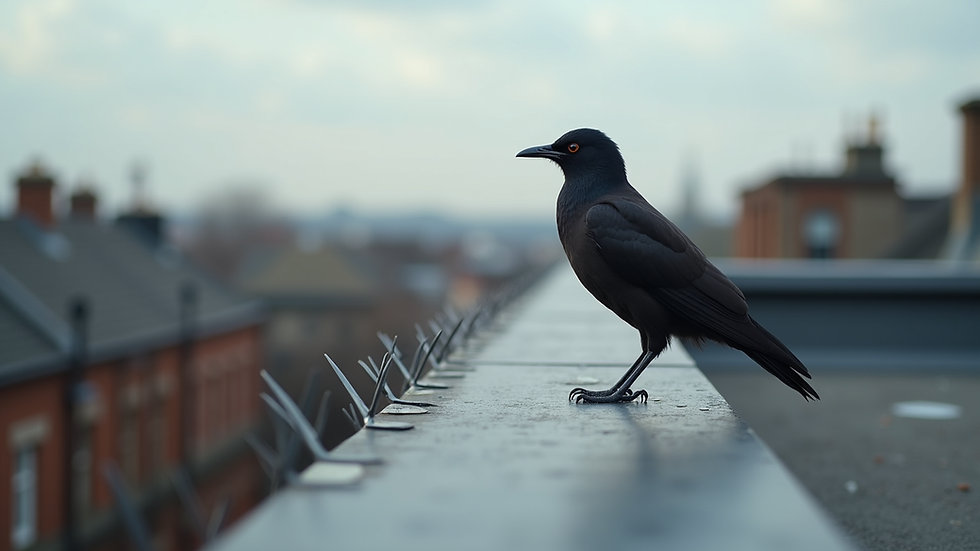
Bird spikes installed on a rooftop ledge to keep birds away
What Are Bird Spikes and Bird Mesh?
Before we compare, it’s good to know what each system is.
Bird spikes are strips with long, thin spikes made of plastic or stainless steel. They attach to surfaces like ledges, gutters, and signs. The spikes don’t hurt birds but stop them from landing or roosting.
Bird mesh is a netting system made from strong wire or plastic. It covers larger areas like solar panels, balconies, or vents. The mesh blocks birds from entering or nesting in those spaces.
Both are humane ways to keep birds away without harming them.
Ideal Use Cases for Bird Spikes and Bird Mesh
Choosing between bird spikes vs bird mesh depends a lot on where you want to keep birds away.
Bird Spikes Work Best For:
Narrow ledges and window sills
Rooftop edges and gutters
Signs and small flat surfaces
Areas where birds like to perch or roost
Spikes are great for small, narrow spots where you want to block birds from landing. They’re easy to install on uneven surfaces.
Bird Mesh Works Best For:
Covering solar panels to protect from bird droppings and nests
Large open areas like balconies, vents, or under eaves
Spaces where birds try to enter or nest
Areas where spikes won’t fit or look out of place
Mesh is perfect for covering bigger spaces and stopping birds from getting inside. It’s especially useful for solar panels, where bird droppings can reduce energy output.
Cost Comparison
Cost is always a factor when choosing bird control.
Bird spikes usually cost less upfront. You can expect to pay around $5 to $15 per linear foot depending on material and quality. Installation is often simple and can be DIY or professional.
Bird mesh tends to be more expensive. Prices range from $10 to $30 per square foot, including installation. The cost depends on mesh type, size, and how complex the area is.
If you have many small ledges, spikes might be cheaper overall. For large areas like solar panels, mesh is worth the investment to protect your system.
Appearance and How They Affect Your Home’s Look
Both systems are designed to be low-profile, but they look different.
Bird spikes are thin and usually come in black or clear plastic. From a distance, they’re barely noticeable but up close, you can see the spikes. Some homeowners find them less attractive on visible ledges.
Bird mesh is more visible because it covers larger areas. However, it can be black or green to blend with surroundings. On solar panels, mesh is often barely seen from the ground.
If appearance matters, spikes might be better for small, visible spots. Mesh works well where it can blend in or isn’t easily seen.

Bird mesh protecting a solar panel from birds
Longevity and Durability
You want a bird control system that lasts in Arizona’s hot sun and occasional storms.
Bird spikes made from stainless steel can last 10+ years. Plastic spikes may degrade faster under UV rays but still last several years. They resist rust and damage well.
Bird mesh made from stainless steel wire is very durable and can last 15+ years. Plastic mesh may wear out sooner but still holds up well with UV protection.
Both systems are built to last outdoors, but stainless steel options offer the best longevity.
Maintenance Needs
Keeping your bird control working means some upkeep.
Bird spikes require little maintenance. Occasionally, you may need to clean debris or check for damage. Spikes rarely need replacement unless broken.
Bird mesh needs more attention. Leaves, dust, and droppings can collect on the mesh, especially on solar panels. Regular cleaning helps maintain effectiveness and solar panel efficiency.
If you want low maintenance, spikes are easier. For mesh, plan on periodic cleaning.
Effectiveness at Bird Control
Both systems work well but in different ways.
Bird spikes stop birds from landing but don’t block access completely. Some smaller birds might squeeze through. They’re great for deterring roosting.
Bird mesh creates a full barrier. Birds can’t get through or nest behind it. It’s the best choice for protecting solar panels and enclosed spaces.
For full protection, mesh is more effective. Spikes work well as a deterrent on open ledges.
Why Many Homes Need Both Bird Spikes and Bird Mesh
In many cases, one system isn’t enough. Homes have different problem areas that need different solutions.
For example, you might use bird spikes on narrow ledges and gutters where mesh won’t fit or look right. At the same time, you install bird mesh over solar panels to stop birds from nesting and dropping waste that reduces energy.
Using both systems together gives you full coverage and keeps your home clean and bird-free.
Real-World Example: Protecting Solar Panels and Roof Edges
At Cheetah Solar Panel Cleaning and Pigeon Proofing, we often recommend combining these products. We install bird spikes on roof edges and ledges to stop pigeons from landing. Then, we use solar panel bird mesh to cover panels and prevent nests and droppings.
This approach keeps your solar panels clean and efficient while protecting your entire roof from bird damage.
FAQs About Bird Spikes vs Bird Mesh
Q: Can bird spikes damage birds?
A: No. Spikes are designed to stop birds from landing without hurting them.
Q: Is bird mesh hard to install?
A: It can be more complex than spikes, especially on large or awkward areas. Professional installation is often best.
Q: How often should I clean bird mesh on solar panels?
A: At least twice a year or more if you notice droppings or debris buildup.
Q: Can I install bird spikes myself?
A: Yes, spikes are usually easy to install with adhesive or screws.
Q: Will bird spikes work on all birds?
A: They work well on pigeons and larger birds but smaller birds might still get through.
Final Thoughts on Bird Spikes vs Bird Mesh
Both bird spikes and bird mesh have their place in protecting your home from birds. Spikes are great for narrow ledges and gutters, offering a low-cost, low-maintenance solution. Mesh is the best choice for covering solar panels and larger areas where you need a full barrier.
Many Arizona homes benefit from using both products in different areas. This combination keeps your property clean, safe, and bird-free.
If you want to learn more about these options, check out our detailed pages on Bird Spikes, Solar Panel Bird Mesh, and Bird Proofing.
Taking action now can save you time and money down the road. Protect your home and solar panels with the right bird control system today.
Ready to keep birds off your roof and solar panels? Explore your options and find the best fit for your home.
Comments